Lebanon has taken a significant step toward easing its chronic electricity shortages by turning to Egyptian natural gas, following the signing of a Memorandum of Understanding (MoU) between the two countries.
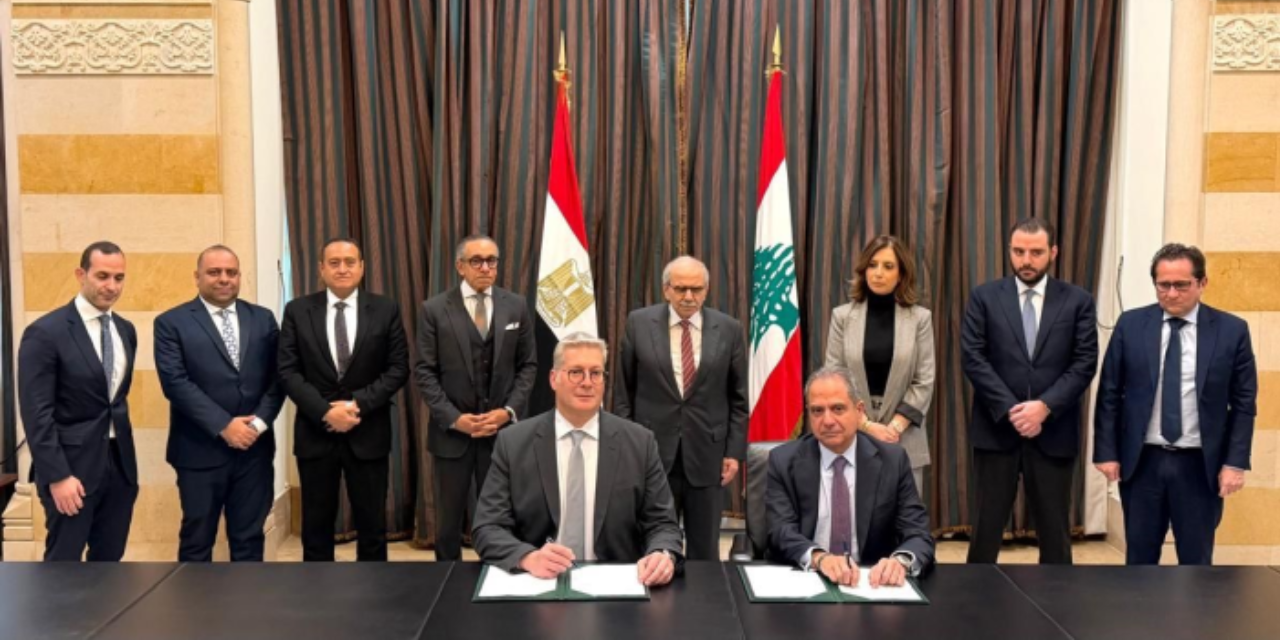
The agreement was signed between Egypt’s Ministry of Petroleum and Mineral Resources and Lebanon’s Ministry of Energy and Water during an official visit by Egyptian Minister Karim Badawi. The MoU aims to supply natural gas to the Deir Ammar Power Plant in northern Lebanon, strengthening bilateral cooperation and reinforcing regional energy security.
According to a statement by Egypt’s Ministry of Petroleum and Mineral Resources, the agreement leverages Egypt’s advanced energy infrastructure, including the Idku and Damietta liquefaction plants, as part of a broader strategy to support regional partners. Egypt has exported approximately 150,000–155,000 cubic meters of liquefied natural gas this year to markets such as Greece, Italy, and Türkiye, underscoring its growing role as a regional energy hub.
The deal is further supported by the leasing of the Energos Force Floating Storage and Regasification Unit (FSRU), currently docked at Jordan’s Port of Aqaba. The FSRU enables the delivery of natural gas through the Arab Gas Pipeline, providing a practical pathway to meet Lebanon’s increasing electricity demand.
During his visit, Minister Badawi met with Lebanese President Joseph Aoun, who described the MoU as a foundational step toward boosting electricity production and improving power supply for Lebanese citizens. President Aoun highlighted the agreement as a realistic and timely solution to Lebanon’s natural gas needs.
Badawi reaffirmed Egypt’s commitment to supporting Lebanon’s stability and economic recovery, emphasizing Egypt’s readiness to share technical expertise and advance regional energy integration. In a separate meeting with Lebanese Parliament Speaker Nabih Berri, both sides underscored the depth of historical ties between Egypt and Lebanon, particularly in the energy sector.
Badawi also confirmed that joint technical working groups will move swiftly to implement the MoU, noting that Egypt is fully prepared to provide specialized expertise across the oil and natural gas industries in support of Lebanon’s development objectives.
The natural gas supply agreement builds upon a broader framework of cooperation established during the 10th Session of the Egyptian-Lebanese Joint Higher Committee, held in Cairo in November 2025. During that session, the two countries signed 15 strategic agreements covering petroleum exploration expertise exchange, refined petroleum product trade, and administrative coordination in taxation and customs—laying the groundwork for deeper and more sustainable energy cooperation.