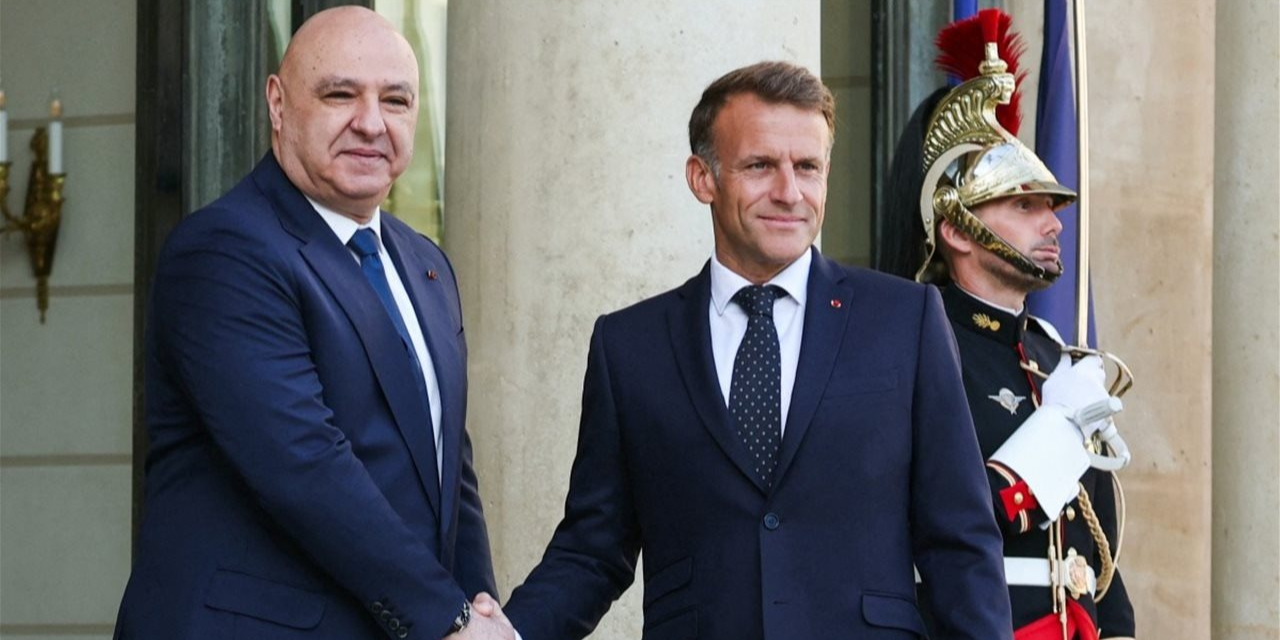
President Joseph Aoun met with French President Emmanuel Macron at the Élysée Palace ahead of a preparatory meeting for a conference aimed at supporting the Lebanese Army and security forces under the Aqaba Initiative.
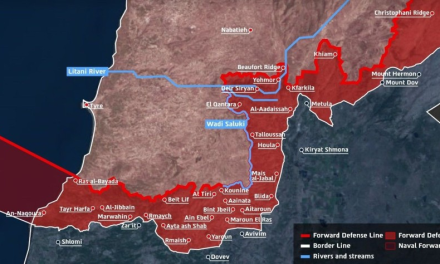
The two presidents discussed efforts to end Israeli attacks on Lebanon in light of the ongoing Lebanese-U.S.-Israeli negotiations and the proposed “framework agreement,” according to the Lebanese Presidency.
President Aoun expressed his appreciation for France’s continued support for Lebanon and for its state, military, and security institutions. He also welcomed the French-Italian initiative concerning the period following the end of the UNIFIL mandate.
The two presidents agreed to strengthen bilateral cooperation, particularly in the economic and energy sectors, including efforts related to the resumption of oil and gas exploration in Lebanon’s offshore blocks.
For many Lebanese citizens, offshore energy exploration represents a potential source of economic recovery, particularly at a time when the country continues to face severe financial and economic challenges. However, expectations should remain realistic: exploration does not automatically translate into commercially viable discoveries or immediate economic benefits.
A significant development came at the beginning of 2026, when Lebanon signed an agreement for gas exploration in Block 8 with a consortium comprising France’s TotalEnergies, QatarEnergy, and Italy’s Eni, during a ceremony held at the Prime Minister’s Office and attended by Prime Minister Nawaf Salam.
The prospects for Lebanon’s offshore energy sector, however, remain closely linked to regional political and security stability. A more stable environment would provide the necessary conditions for sustained exploration, investment, infrastructure development, and eventual commercialization of any commercially viable discoveries.
Beyond the potential revenues from oil and gas, Lebanon has an opportunity to position itself within the broader Eastern Mediterranean energy landscape. The region has been developing increasingly sophisticated networks for exploration, energy production, infrastructure, interconnection, and regional cooperation.
For Lebanon, therefore, the objective should extend beyond simply discovering hydrocarbons. The longer-term opportunity is to develop the infrastructure, regulatory framework, investment environment, and regional partnerships necessary to become a meaningful participant in the East Mediterranean energy hub.
The path remains uncertain and will depend on political stability, security conditions, successful exploration results, investment decisions, and regional cooperation. Nevertheless, renewed international engagement and progress in offshore exploration could provide Lebanon with a concrete opportunity to reconnect its energy sector with the wider Eastern Mediterranean market.